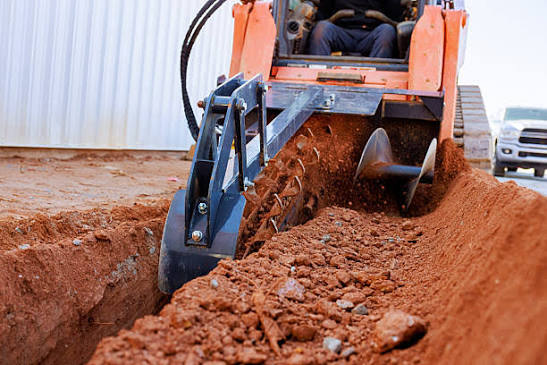
Whether you're running a new water line, adding electrical service to a detached structure, or installing drainage pipe, utility trenching is one of the most common excavation projects DFW homeowners run into — and one of the easiest to get wrong without the right experience. Here's what trenching actually involves and why it's worth hiring an experienced excavation team rather than tackling it yourself.
Utility trenching is the process of digging precise trenches to install or repair underground utility lines — water, electrical, gas, sewer, or drainage. Unlike general excavation, trenching requires exact depth, width, and slope specifications that vary depending on the type of utility being installed and local code requirements.
Each utility type has specific depth requirements largely driven by frost lines, safety codes, and the utility's own specifications. Water lines, for example, typically need to be buried deep enough to avoid freeze damage, while electrical conduit has its own depth and protection requirements to prevent damage from future digging or landscaping. Getting these depths wrong isn't just a code violation — it can lead to line damage, costly repairs, and safety hazards down the road.
One of the biggest risks in any trenching project is accidentally hitting an existing utility line — something that happens more often than homeowners expect when trenching is done without proper locating beforehand. Striking a gas line, electrical line, or even an existing water line can range from a costly repair to a genuine safety emergency. Professional excavation teams always coordinate utility locates before digging begins, identifying existing lines so they can be avoided entirely.
Water Line Installation or Repair
Whether connecting a new structure to a water supply or repairing an aging line, water line trenching requires precise depth and careful backfilling to prevent future settling issues.
Electrical Conduit for Detached Structures
Homeowners adding a detached garage, workshop, or guest house often need trenching for electrical service, which requires specific conduit protection and depth to meet code.
Drainage Line Installation
French drains, downspout extensions, and other drainage solutions often require trenching to route water away from the foundation — particularly important given how much DFW's clay soil struggles with standing water.
Irrigation Line Installation
Sprinkler systems and irrigation lines require trenching throughout a property, often needing careful coordination around existing landscaping, trees, and hardscaping.
North Texas's heavy clay soil adds another layer of complexity to trenching work. Clay soil holds water differently than sandy or loamy soil, which affects both the digging process and how trenches need to be backfilled and compacted afterward to prevent future settling or shifting. An excavation team with local experience understands how to work with — rather than against — DFW's soil conditions.
1. Utility Locates
Before any digging begins, existing utility lines are identified and marked to avoid damage during excavation.
2. Planning and Layout
The trench path is planned based on the specific utility being installed, required depth, and the shortest safe route to minimize disruption to the property.
3. Excavation
Trenches are dug to the required depth and width using appropriate equipment for the scope of the project — everything from smaller trenchers for residential work to larger excavation equipment for bigger jobs.
4. Installation
The utility line, conduit, or pipe is installed according to code specifications.
5. Backfilling and Compaction
The trench is backfilled and properly compacted to prevent future settling, which is especially important in clay-heavy DFW soil.
6. Site Restoration
The surface is graded and restored as close to its original condition as possible, or prepped for whatever comes next — sod, landscaping, or paving.
It might seem simple enough to rent a trencher and dig a line yourself, but the risks are real: hitting an unmarked utility line, digging to an incorrect depth that fails inspection, improper backfilling that leads to settling issues months later, or damaging existing landscaping and hardscaping in the process. Professional excavation teams bring not just the equipment, but the knowledge of code requirements and soil behavior that make the difference between a trench that holds up for decades and one that causes problems down the road.
If you're planning any project that requires utility trenching — new construction, a detached structure, drainage improvements, or irrigation — the best first step is a consultation with an experienced excavation team who can assess your property, identify any existing utilities, and plan the safest, most efficient route.

Need utility trenching done right? Request a free excavation quote here.


